

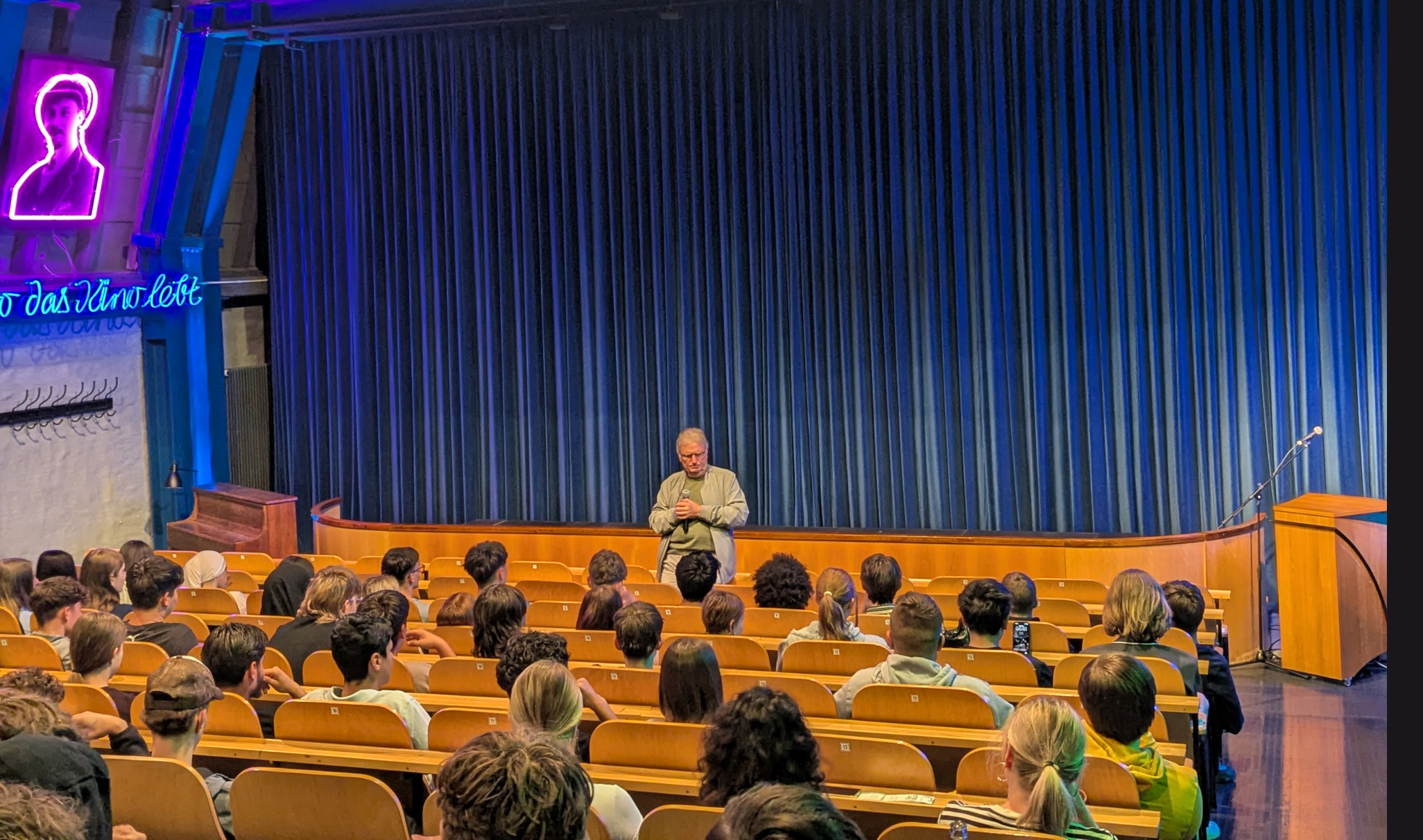
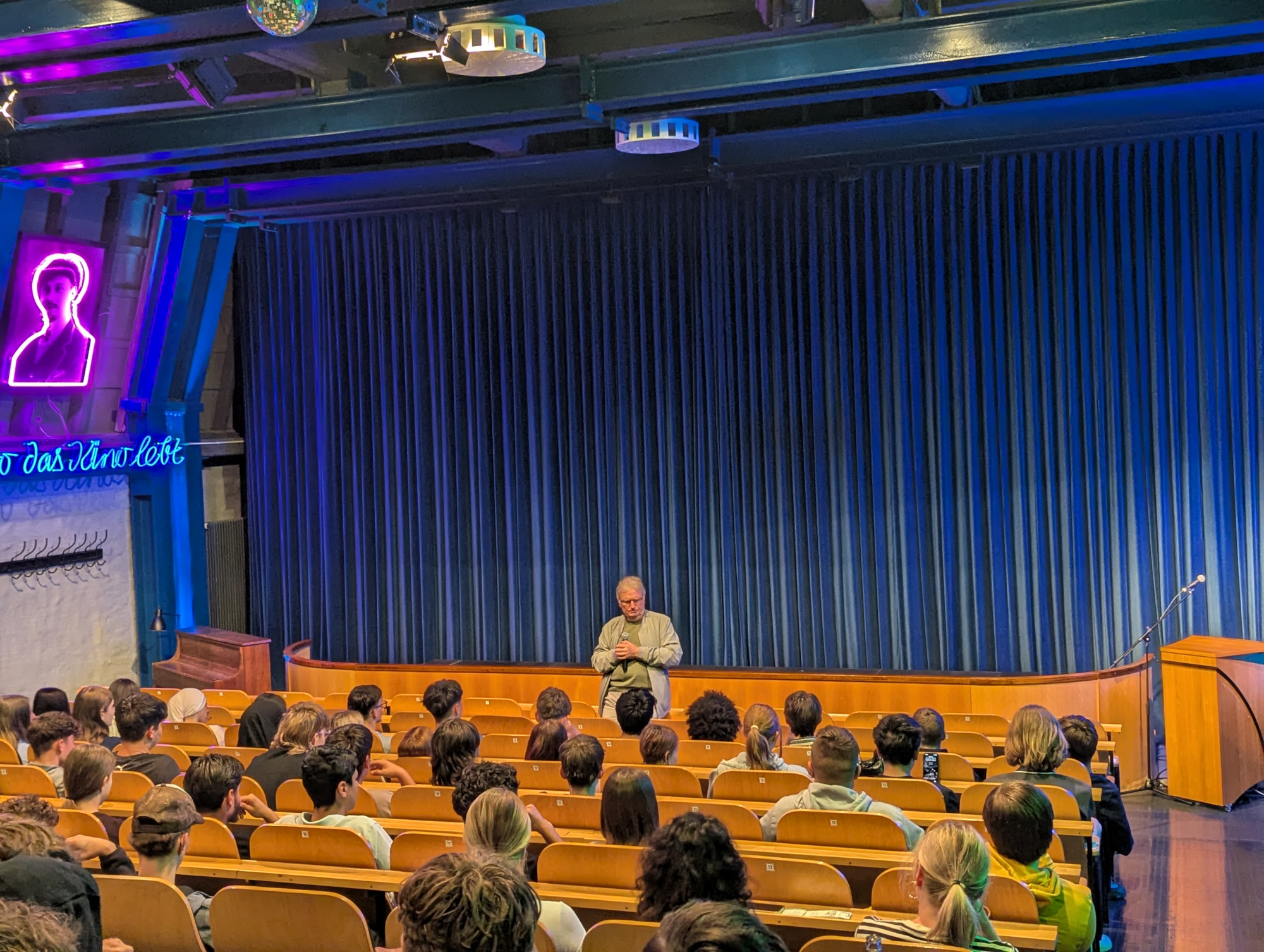
 At the Filmhaus Saarbrücken, students from classes 9S2, 2.6, 1S2 and 1S3, organised by Ms Beitelstein and Ms Thomé, took part in a cinema seminar on the Nazi propaganda film “Hitlerjunge Quex” (1933). The aim of the event was to analyse the film not as entertainment but as a historical document, and to critically examine the mechanisms of Nazi propaganda.
Following an introduction to the historical context of the Nazi era by the former director of the Landeszentrale für politische Bildung (Centre for Political Education), Dr Burkhard Jellonek, the group watched the film together. In the seminar that followed, the participants engaged in an in-depth examination of the film’s origins, its visual language and its cinematic techniques. It became clear how the direction, music, camerawork and characterisation were deliberately employed to convey the ideology of the Nazi regime and, in particular, to influence young people.
Particular emphasis was placed on the question of how propaganda works and why it plays such a central role, particularly in authoritarian systems. The pupils discussed how emotions are stirred up, enemy stereotypes are created and political messages are conveyed through cinematic techniques. At the same time, they explored why critical media literacy remains of great importance today.
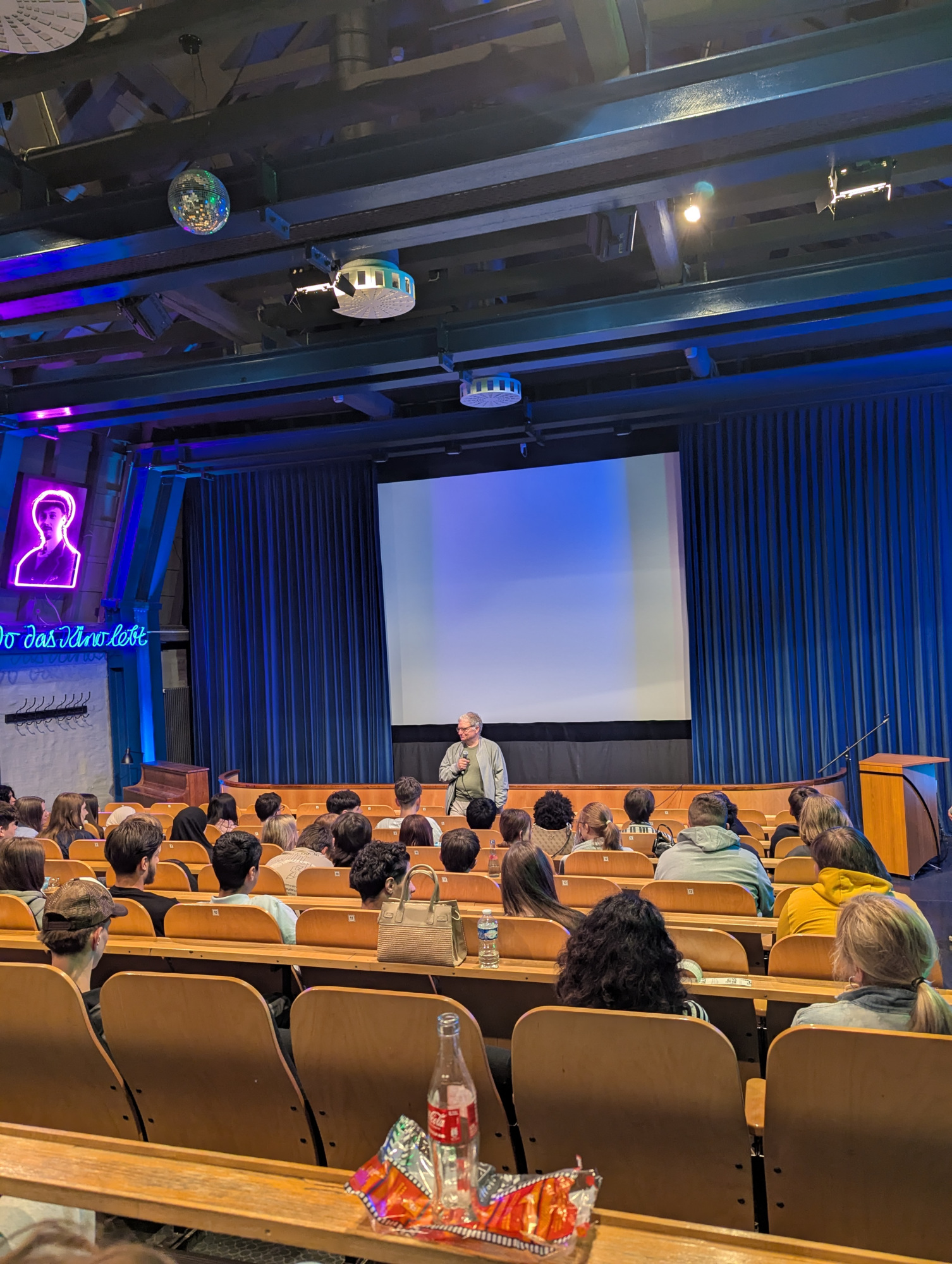
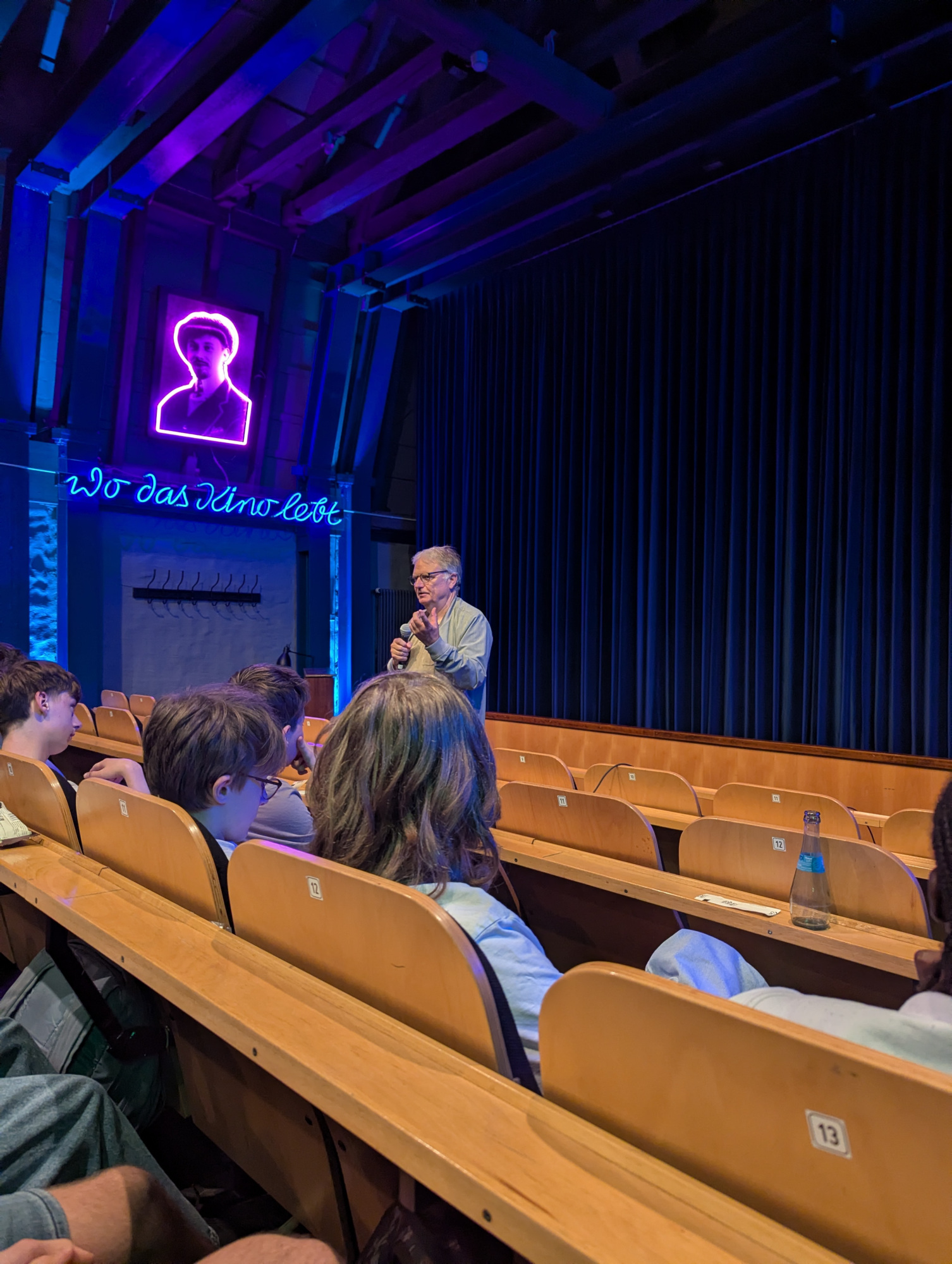
The cinema seminar offered the young people the opportunity to experience history in a vivid way and to critically analyse historical sources. The combination of film education and historical and political education fostered an understanding of how propaganda works and strengthened their ability to evaluate media content critically.
The event at the Filmhaus Saarbrücken highlighted that engaging with historical propaganda films makes an important contribution to democracy education. It encouraged participants to recognise manipulation strategies, critically evaluate historical developments and reflect on the significance of democratic values for the present day.