

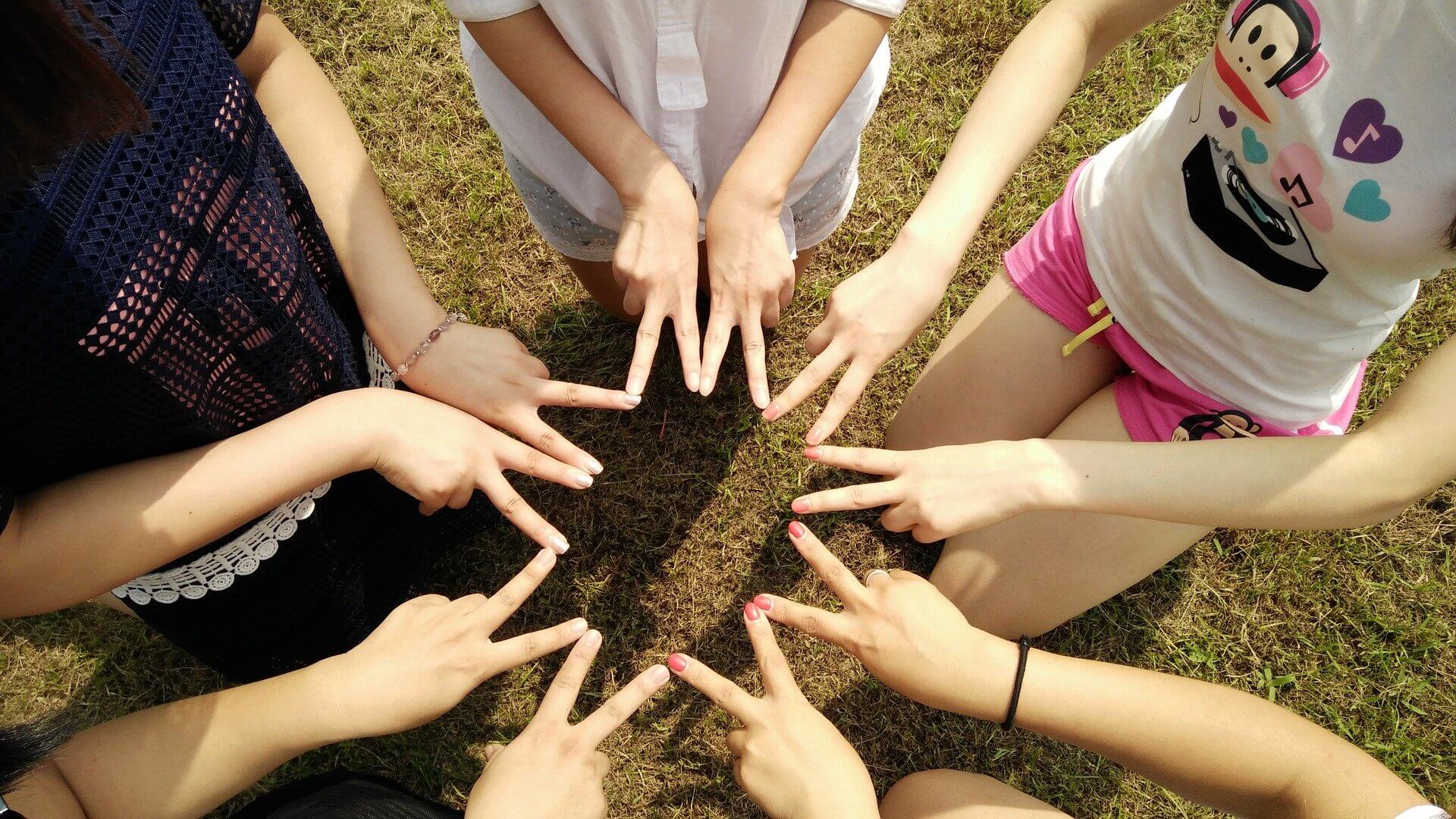
INTERNAL EXCHANGE (YEARS 6–7) 🇨🇵
To promote integration and language learning, the Franco-German High School has set up an internal German-French exchange programme between families of pupils in German Year 6 and French Year 6e.
Such an exchange is the ideal opportunity to practise language skills and gain valuable insights into the everyday culture of the partner country. As pupils at Franco-German High Schools, the children do not have to travel far to enjoy the benefits of a pupil exchange! Regardless of how long a child stays with the host family or how long the exchange pupil stays with the host family, both attend their own classes during the exchange period; this way, nobody misses out on anything and the exchange periods can be arranged on an individual basis.
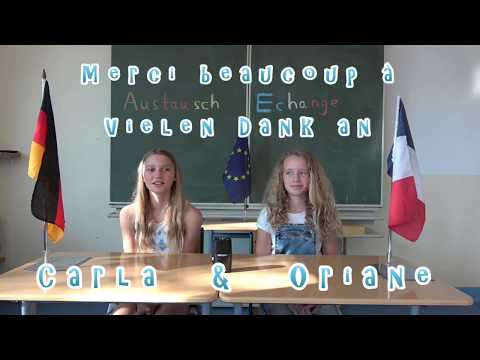
Clicking on the video will take you to YouTube. Further information can be found in the privacy policy.
(Contact: Na-young Choi & Aurore Berton)
ERASMUS+ PROJECT (YEARS 7–11) 🇪🇸 🇮🇹 🇫🇮 🇵🇹 🇳🇱 🇱🇻 🇭🇷 🇨🇵 🇩🇪
 The school partnerships established by the Franco-German High School Saarbrücken form part of an exchange programme centred on a shared project topic, which pupils work on over a period of between 6 months and 3 years.
Several schools from EU Member States or EU partner countries are involved in the projects.
Every year, exchange visits are organised, during which pupils work in international teams on tasks related to the chosen topic.
Naturally, this also provides an opportunity to learn about other cultures and broaden one’s horizons.
Every project participant travels at least once to one of the partner countries and, where permitted by the laws of the host country, gains an authentic insight into the everyday lives of the local people by staying with a host family.
In return, every Franco-German High School participant undertakes to host a pupil at their home when the meeting of the partner schools takes place in Saarbrücken.
(Contact: Paul Grannec)
Erasmus+ Accreditation – General Objectives
 Erasmus+ Accreditation – General Objectives
The German-French High School in Saarbrücken has been awarded the Erasmus+ accreditation, which enables us to carry out a wide range of international activities with financial support from the EU.
Thanks to this Erasmus+ accreditation, we have been able to expand our European projects.
We are now more flexible and have a broader scope, enabling us to support activities that were not previously covered by the Erasmus+ programme.
For example, we can now provide financial support…
- for professional development programmes that enable teaching staff to gain an insight into the education systems of other European countries.
- for individual pupil exchanges within Europe.
- for the exchange programme with Bilbao.
- for the European Student Parliament.
- for a new project on technology in collaboration with our partner school in Madrid, in which pupils are introduced to robot programming.
Once the current projects have been completed, we will be able to continue working with our network of partner schools, which we have built up over the years.
Erasmus+ is all about mobility and exchanges within the European Union.
In a broader sense, the general objectives of an Erasmus+ programme are
- Promoting and facilitating the mobility of school pupils and students in Europe
- Using education and culture to address the challenges facing Europe
- Creating a more inclusive European society with greater cohesion
- Developing language skills
- Strengthening the sense of belonging in Europe
- Contributing to the development of young people, their autonomy and their ability to participate actively in democratic life in Europe
- Making effective use of Europe’s potential in terms of talent and social resources
Projects & Partners
PRojeCTS und PartnerS 2025-2026
 Food project with Madrid, Spain 🇪🇸
– Learning about food bank (chain of distribution, sustainable practices)
– Learning about and helping in a soup kitchen
– Learning to read food labels
Food Oliveira, Portugal 🇵🇹
– Organising a Christmas food festival
– Exchanging Cristmas traditions
– Conference about junk food
Theatre project Gouda, Netherlands 🇳🇱
– Acting
– Visiting art museums
– Discovering life in a Dutch family
Project environmentally-friendly suncream Bilbao, Spain 🇪🇸
– Pupils design an environmentally-friendly suncream collaboratively with their Spanish partners
– Cultural visits
– Discovering life in a Spanish family
Cultural exchange with Liepaja, Latvia 🇱🇻
– Cultural visits
– Discovering life in a Latvian family
Cultural exchange with Rome, Italy 🇮🇹
– Cultural visits of Roman landmarks
– Visiting art museums
– Discovering life in an Italian family
Parlement européen des lycées 🇪🇺
– Together with other European schools, students design, propose laws, and try to have them voted through in the European Parliament in Strasburg.
– The purpose is to experience democracy at work
Teachers job-shadowing in Helsinki (Finland) 🇫🇮 and Rome (Italy) 🇮🇹
– Learning and exporting good practices from abroad
Students short-term mobilities 🇪🇸 🇮🇹
– These exchanges occur most often with our partners in Spain and Italy.
– Together with their partners, our students attend classes with their partners.
– The purpose is to learn about another educational system and to improve linguistic skills
2020-2023 The Soil under my Feet
Partners:
Spain : Colegio Zola, Las Rozas de Madrid 🇪🇸
Germany/France : DFG-LFA, Saarbrücken 🇨🇵 🇩🇪
Greece : Lyceum of Vrachneika, Patras 🇬🇷
Croatia : Gimnazija Lucijana Vranjanina, Zagreb 🇭🇷
Italy : Istituto d’Istuzione Secondaria Superiore, Palazzolo Acreide 🇮🇹
Objectives:
In the six countries involved in the project (Germany, France, Greece, Italy, Croatia and Spain), population movements linked to conflicts or catastrophic economic crises have long since moved from the news into our towns and classrooms.
Managing immigration is at the top of the European agenda, and one of the key issues is ensuring the proper integration of displaced populations.
We believe it is important for our pupils to engage with the topic of immigration within a school context in order to avoid the pitfalls of simplistic and populist explanations. They must also be aware of the danger of stigmatising social groups that would, in effect, be excluded from the European community, which would sow the seeds of future social conflict.
Through a combination of workshops, artistic projects, research, visits and encounters with refugees, we aim to raise our pupils’ awareness of their changing social environment.
Project website :
2018-2020 Headlines : More than Meets the Eye
Partners:
Spain : Colegio Zola, Las Rozas de Madrid 🇪🇸
Finland : Virtain Lukio, Virrat 🇫🇮
Greece : Lyceum of Vrachneika, Patras 🇬🇷
Germany/France : DFG-LFA Saarbrücken 🇨🇵 🇩🇪
Objectives:
The main motivation behind our project is the conviction that the media and the information they disseminate are essential components of a healthy, democratic and progressive society.
Our aim is to shed light on the creation and dissemination of information through a combination of practical activities and analysis.
We also wish to compare how the partners view one another in the media, in order to identify commonalities and examine differences in the coverage of current issues across the various participating countries.
In short, we aim to promote civic awareness and democratic values amongst our pupils.
We also aim to promote the use of IT tools and foreign languages, which are always an important by-product of Erasmus projects.
Through activities such as comparing the front pages of their country’s newspapers, journalistic exercises and the production of podcasts, we will encourage them to take an active role themselves rather than merely being passive consumers of information.
2015-2018 “JobTrotter”
Partners:
Germany/France: Deutsch-Französisches Gymnasium Saarbrücken 🇨🇵 🇩🇪
Spain: Grupo Zola Educación SL in Madrid 🇪🇸
Bulgaria: “Sv. Kliment Ohridski”, Montana 🇧🇬
Italy: Istituto di Istruzione Superiore “Enrico Fermi”, Vittoria 🇮🇹
Turkey: Zeytinburnu İMKB MTAL, Istanbul 🇹🇷
United Kingdom: Lancaster and Morecambe College, Lancaster 🇬🇧

Objectives:
Each project addresses strategic themes set by the European Union.
In this project, the focus centred on the key concepts of work and mobility.
Through various activities, such as simulated job interviews, presentations on sales strategies and artistic projects, the pupils gained an understanding of working in international teams.
The main aim was to make it easier for them to look for work within the EU in the future, to start building networks, to be open to new experiences, to boost their self-confidence and to open up new prospects for the future.
Project page:
2012-2014 « Waste not, Want not! »
Partners:
Germany/France : Deutsch-Fanzösisches Gymnasium Saarbrücken 🇨🇵 🇩🇪
Spain : Grupo Zola Educación SL in Madrid 🇪🇸
Hungary : Zoltan Kodaly School, High School ed AMI, Szekesfehervar 🇭🇺
Turkey : Muruvvet Evyap private school in Istanbul 🇹🇷
United Kingdom : Heston Community School, London 🇬🇧

Objectives :
The project name refers to an English proverb that urges people not to waste anything, so as not to find themselves in a difficult situation later on.
The values that the pupils were intended to learn here were linked to environmental awareness and sustainable management.
How can waste be avoided? How does recycling work? How can new things be created from waste products? How can sensible and responsible consumption be achieved?
Project site:
Activities
WHAT HAVE WE DONE TOGETHER WITH OUR PARTNERS?
The list is quite long, but here we highlight a few key activities.
Pupils turn into reporters in Greece

Media literacy
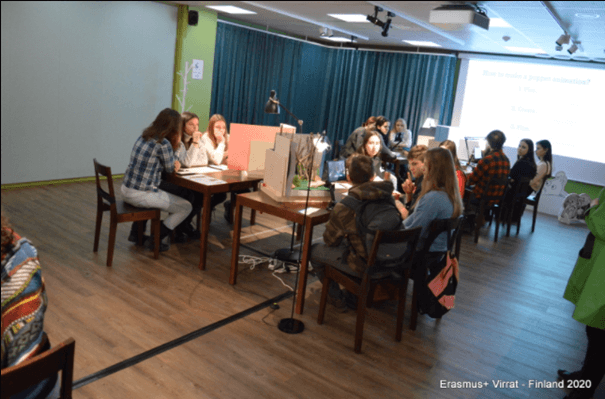 https://www.eu-in-the-media.eu/index.php/finland-results/172-finland-result-animation
The pupils must also present, in English, the career field in which they would like to work.
Objectives: to boost self-confidence, improve language skills, acquire technical skills in video production, and reflect on their own future.
Presentation by the Bulgarian pupils
A simple but original video by the Bulgarian pupils, in which they present their dream jobs.

Clicking on the video will take you to YouTube. Further information can be found in the privacy policy.
The pupil who produced this clip would like to become a film director.
Set up shop – Italy
The activity, developed by the English teaching team for the first meeting in Sicily, was designed to foster the pupils’ imagination and teamwork skills.
Each team must use an identical starter kit to invent, manufacture and then sell a product. An international jury decides which product is the most convincing.

The key concepts for this exercise are imagination, persuasiveness and language skills.
Chalk outline – Madrid
Preparing for a job interview.
What factors influence a job interview?
Devise a profession and outline all the elements that are important for practising it: hairstyle, behaviour, jewellery, choice of words, …

Objectives: To raise awareness of key aspects of job-seeking and self-perception
Looking in the Mirror – Montana, Bulgaria
Each project partner was required to carry out research into a serious issue in the fields of politics, economics and sociology within Europe.
The pupils presented their work in Montana. A game was developed based on the information gathered.
 Objectives: Objectivity, source analysis.
My dream job – Germany-France
In each participating school, the pupils were tasked with conducting interviews with people who work in a profession that they would also like to pursue or dream of having.
For Louis, Bastian and Joël, this would be a professional footballer.
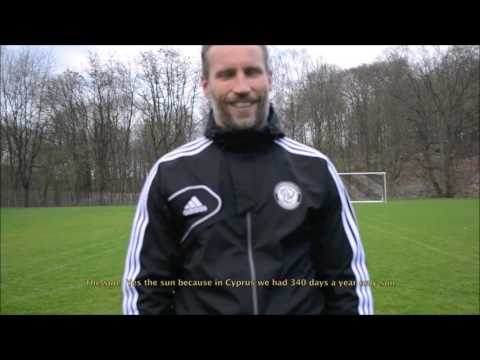
Clicking on the video will take you to YouTube. Further information can be found in the privacy policy.
Objectives: familiarisation with video technology for all those who chose this form of presentation; reflecting on the future; building the self-confidence needed to make contact and hold a conversation
My Dream Job – Germany–France
Also on the theme of the ideal job, the pupils have designed artworks to depict the ideal profession they would pursue if they ever had to emigrate.
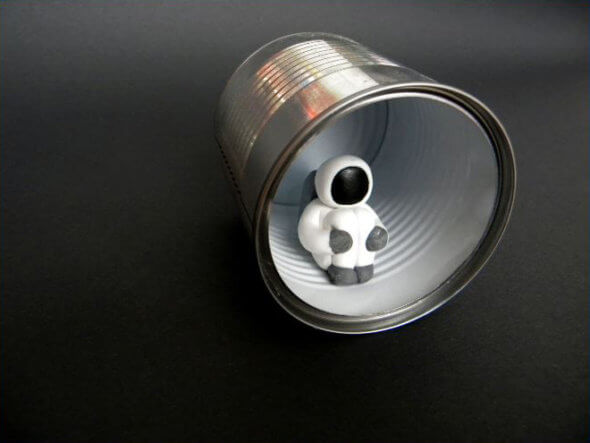
Aims: To stimulate creativity, encourage reflection on the future, and promote self-awareness
Taking chances – Lancaster, United Kingdom
Why do people leave their home country? How does a foreigner view their host country? Do new residents regret their decision?
Each participating country provides interviews on the topic to help answer these questions.
The pupils from Lancaster interviewed a maths teacher originally from Zimbabwe.

Clicking on the video will take you to YouTube. Further information can be found in the privacy policy.
Objectives: To change perspectives, and to promote self-confidence and open-mindedness.
Work and gender – Istanbul, Turkey
Men working in traditionally female-dominated professions and women working in traditionally male-dominated professions.
How do they experience their jobs? How are they treated? Do they feel discriminated against?
Büsra from Istanbul spoke to a ladies’ hairdresser.
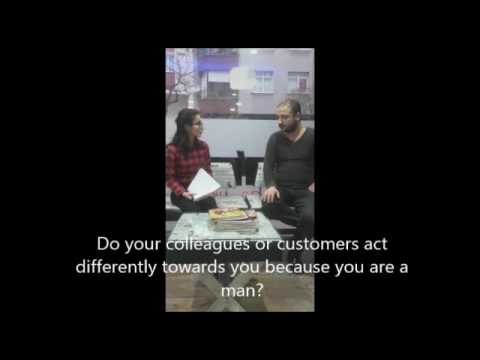
Clicking on the video will take you to YouTube. Further information can be found in the privacy policy.
Objectives: To broaden perspectives, and to foster self-confidence and open-mindedness.
Setting up and presenting one’s own business – Saarbrücken, Germany
Role play
Working in international teams, the pupils must invent a product, develop a sales strategy and, in an English-language presentation, convince a panel acting as the financing bank.

Objectives: To develop entrepreneurial spirit, creativity and teamwork skills; to apply language skills; and to boost self-confidence.
Trips – Germany–France
As part of the international Erasmus+ exchanges, there are also talks and visits to businesses and political institutions.
The aim is also to carry out activities outside the school setting in order to emphasise the connection to real life.


Objectives: To foster a sense of civic responsibility amongst pupils; to broaden their horizons.
Impact
LONG-TERM IMPACTS
An Erasmus+ project offers all participating schools an exciting opportunity to bring pupils and teachers together around a shared theme. It combines hard work, creativity and socialising, with the meetings with exchange partners being real highlights, as partners often become true friends.
Perhaps this is the essence of such a programme, because its impact is by no means limited to the project itself: friendships endure, the desire to discover new things grows, and a genuine sense of belonging develops. The desire to repeat these experiences is unmistakable, and so this type of project often serves as a springboard for other Erasmus programmes during university studies.
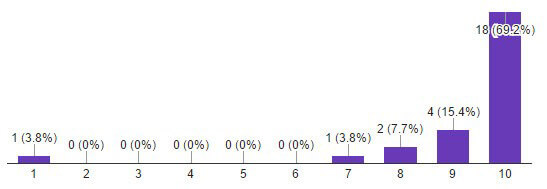
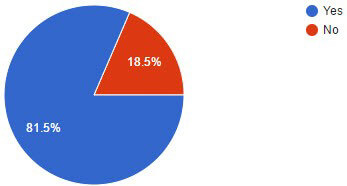
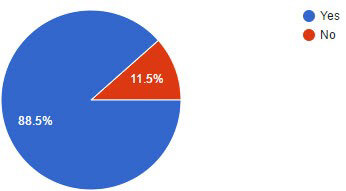
After every Erasmus exchange, we ask the pupils involved about their impressions, highlighting both the positive aspects and those that could be improved. The feedback clearly demonstrates the long-term impact.
Would you take part in similar activities in the future?

On a scale of 1 to 10, to what extent do you regard the Erasmus meet-up as an interesting social experience?



I now feel closer to Europe.
Laura
I learnt some interesting things about Sicily and that the people there are very friendly.
Niya
Communicating with people who, until then, had been complete strangers to me.
Elisa
Has this experience changed you?


This experience has made me more confident and helped me to approach others and overcome my shyness.
Iciar
I feel more confident and am less prejudiced towards others. I accept people as they are and have a more positive attitude towards strangers.
Léontin
I now have friends in Spain, Italy, Turkey, England and Bulgaria.
Sandro
» Reports on past Erasmus activities
Individual Erasmus+ pupil exchange (Years 8–10) 🇪🇺 🇳🇴 🇮🇸
 Mobility activities funded by Erasmus+:
– Participating countries: European Union member states + Iceland, Liechtenstein, North Macedonia, Norway, Serbia and Turkey
– There are two types of mobility: short-term mobility (1 to 29 days) and long-term mobility (30 to 365 days).
– Deadline for submitting applications: end of January
» Individual Erasmus+ mobility programmes at DFG-LFA
(Ansprechpartner: Paul Grannec)
Individual student exchange (Years 7–11) 🇨🇵 🇧🇪 🇱🇺
Presentation: Individual exchange programmes at DFG-LFA
The Voltaire Programme: six months at a French school (Year 9 and seconde) 🇨🇵
 The Voltaire Programme is an individual exchange programme for high-achieving and motivated Year 9 pupils whose knowledge of the partner language enables them to participate in lessons in the partner country without difficulty.
French pupils come to Germany for six months, after which the German partner pupils spend six months at the host school in France. The exact travel dates are arranged individually between the families.
Participants receive a travel allowance and a cultural portfolio. At the end of their stay, they are awarded a certificate from their host school.
Host schools are expected to actively support the French pupils during their stay and integrate them into school life.
Host parents are expected to integrate the French pupils into their family, encourage them to attend cultural events and use German in everyday communication.
(Contact: Nadège Deguilhem & Janine Thomé)
The Brigitte Sauzay Programme: a three-month exchange (Years 8–11) 🇨🇵
 Working closely with the German and French education authorities, the Franco-German Youth Office (DFJW) has been promoting medium-term individual pupil exchanges between Germany and France since 1989.
The Brigitte Sauzay Programme supports pupils in Years 8 to 1e who wish to undertake an individual exchange stay in France.
German pupils usually stay in France for three months. In individual cases, the duration of the stay may be limited to eight weeks. The timing of the exchange is agreed in consultation with the relevant teachers at the participating schools. During their stay, the German pupils are accommodated with their exchange partner’s family and attend French lessons for at least six weeks.
In return, the German pupils host their French partner in their own family and attend school with them in Germany. (The programme is therefore based on reciprocity; naturally, the stays are not intended to take place simultaneously, but one after the other.)
The DFJW may grant participants a lump-sum contribution towards travel costs, provided that the school submits a corresponding application for a grant via the relevant local education authority before the start of the exchange. Application forms can be obtained from the relevant local education authority or directly from the DFJW.
(Contact: Nadège Deguilhem & Janine Thomé)
The Schuman Programme: 2 weeks in France (Years 7 to 10) 🇨🇵
 In the spirit of Robert Schuman, one of the founding fathers of European integration, the exchange programme that bears his name enables pupils in our Greater Region to take part in a four-week (2 x 2 weeks) individual exchange with a partner pupil from one of the neighbouring regions, thereby enhancing their language and intercultural skills. Accommodation is provided by the host family of the partner pupil, with whom the students also attend school.
» Views of DFG-LFA pupils (link to the Padlet page)
(Contact: Nadège Deguilhem & Janine Thomé)